Conditions · Prenatal & postpartum · Portland & Vancouver
Postpartum doesn't have an expiration date.
Pregnancy and postpartum recovery are two of the most underserved windows in healthcare. It doesn't matter whether you're pregnant now or your kids are in middle school.
Two-hour first visit · one-on-one with the doctor every visit
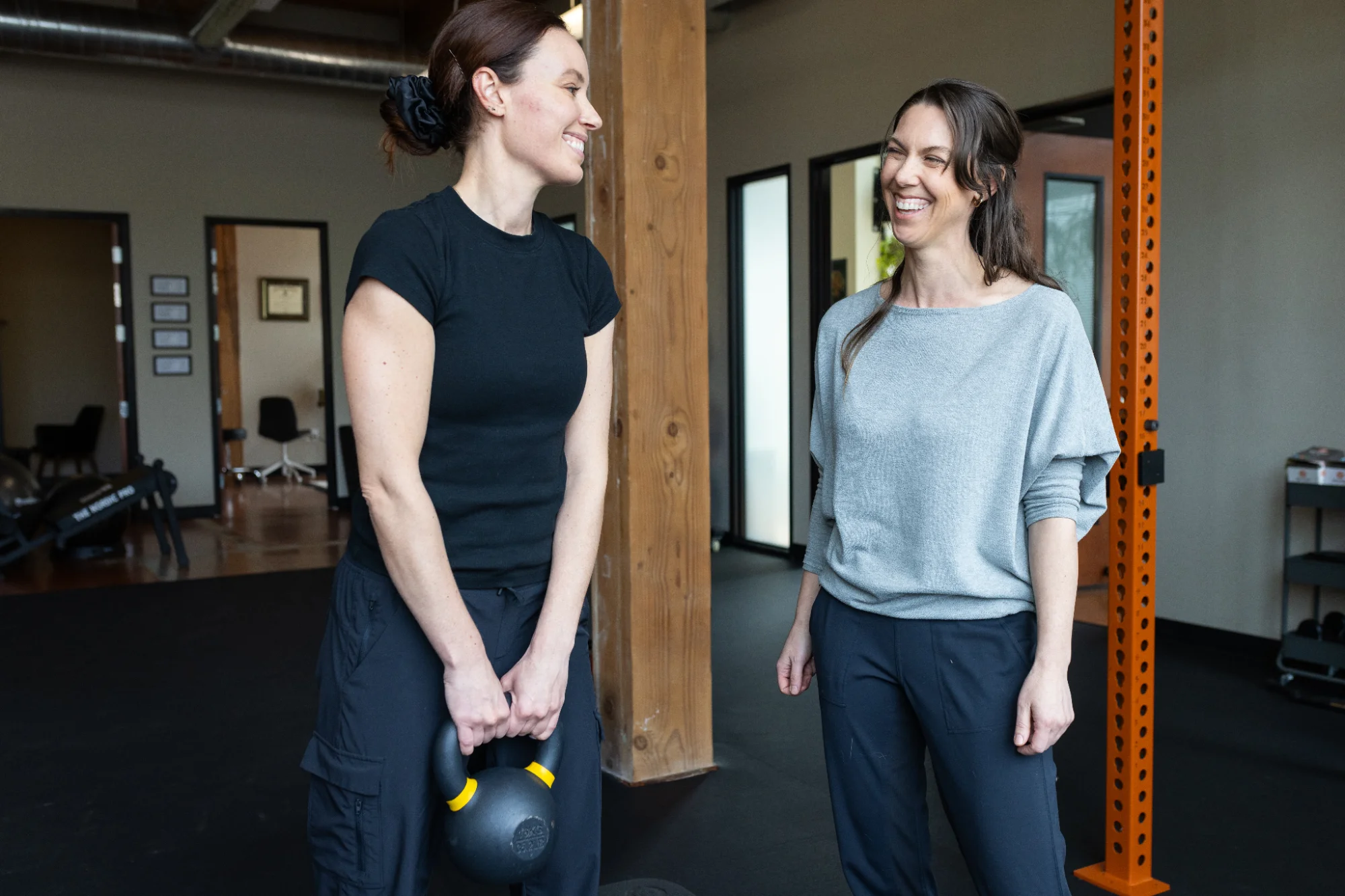
Sound familiar?
What patients bring to us
What we see
Pregnancy reshapes how the body braces, breathes, and hinges.
Most patients we see in this space are carrying years of unnecessary pain — back issues, incontinence, pelvic instability — because no one helped them rebuild after their bodies changed.
When the trunk's bracing system — the diaphragm, deep abdominals, and pelvic floor working together — stays coordinated through these changes, most pregnancies stay comfortable. When it doesn't, the spine takes the load and the back, hips, and pelvis pay for it.
This work is led by Dr. Whitney, whose clinical focus includes prenatal and postpartum care.
How we evaluate · The Movement Paradigm
We watch how you breathe, brace and hinge.
In prenatal and postpartum patients, we watch how the breath, brace, and hinge are coordinating — three patterns that pregnancy and birth specifically disrupt and that recovery specifically depends on.
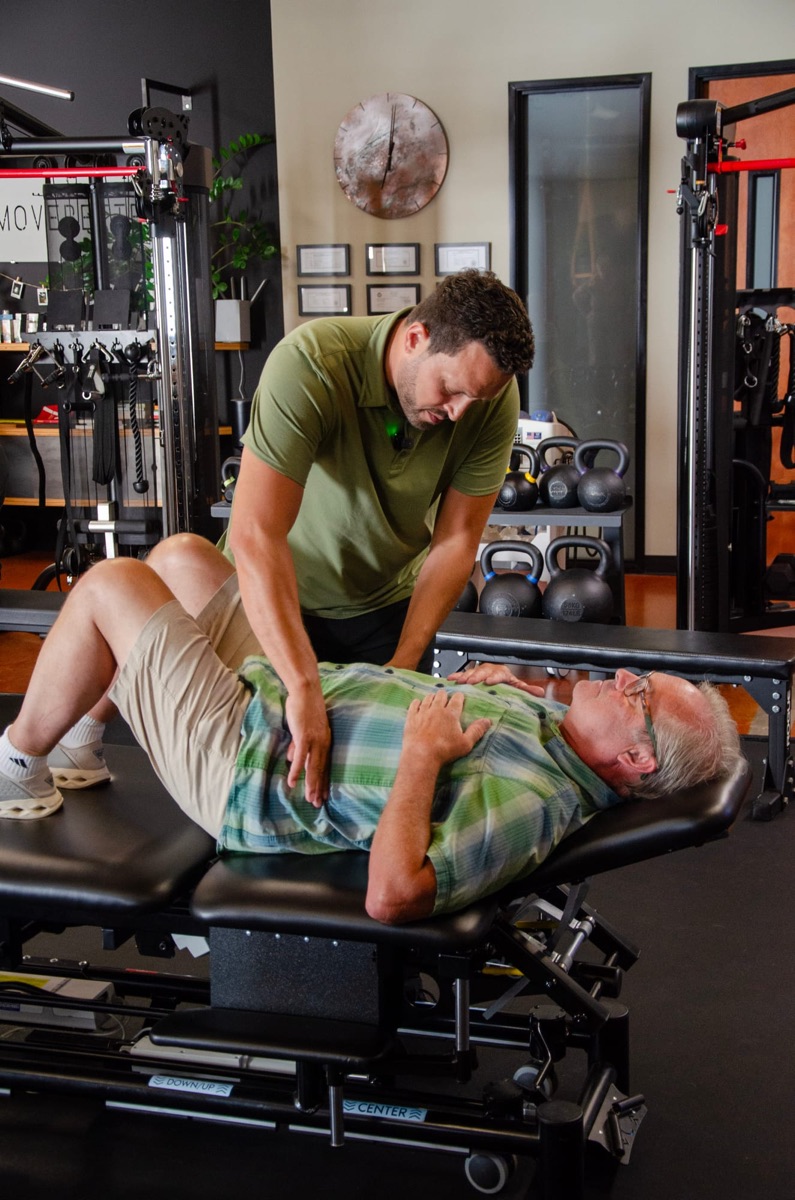
Breathe
Breathing that's moved high in the chest as the diaphragm has lost room (prenatal) or hasn't relearned its full descent (postpartum).
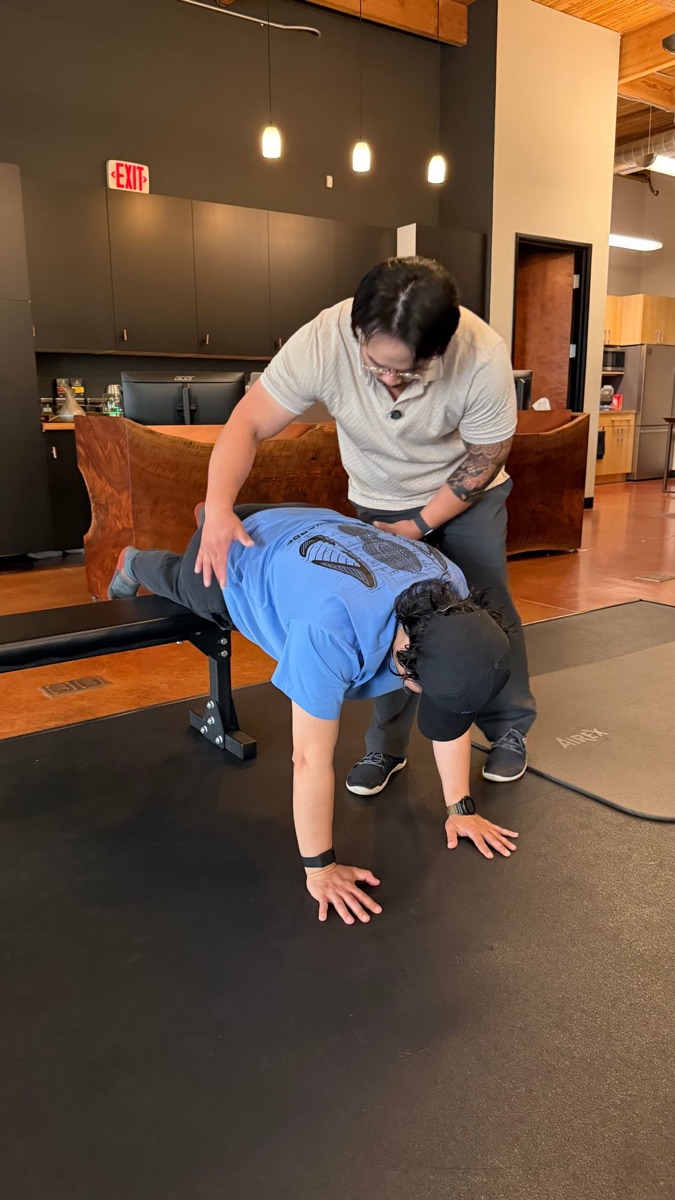
Brace
A brace pattern where the diaphragm, deep abdominals, and pelvic floor aren't co-contracting the way they did before pregnancy.
Most disrupted by pregnancy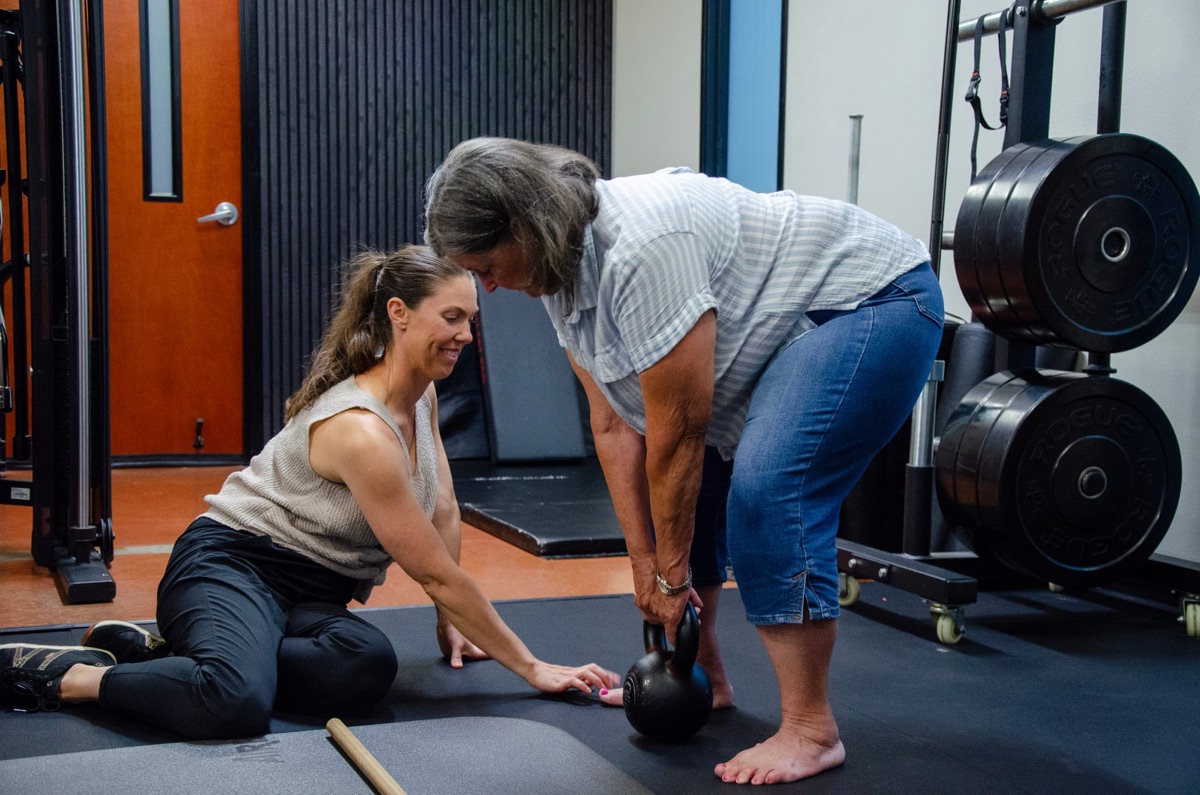
Hinge
A hinge pattern that recruits the spine instead of the hips, because the deep system isn't supporting trunk load.
What happens when you book
A clear path, from your first visit forward.
The first visit
Two full hours, one-on-one with the doctor. Movement screen, pattern scoring, and a plan built around what your body actually does - not what a template says it should.
Six-visit plan
Adjustments, soft-tissue work, and pattern retraining. Same doctor each time. Same room. Visible progress that you can feel between visits.
Re-exam & next steps
At visit six we re-score the patterns and decide together - maintain, taper, or refer out. If we're not the right fit, we'll point you to who is.
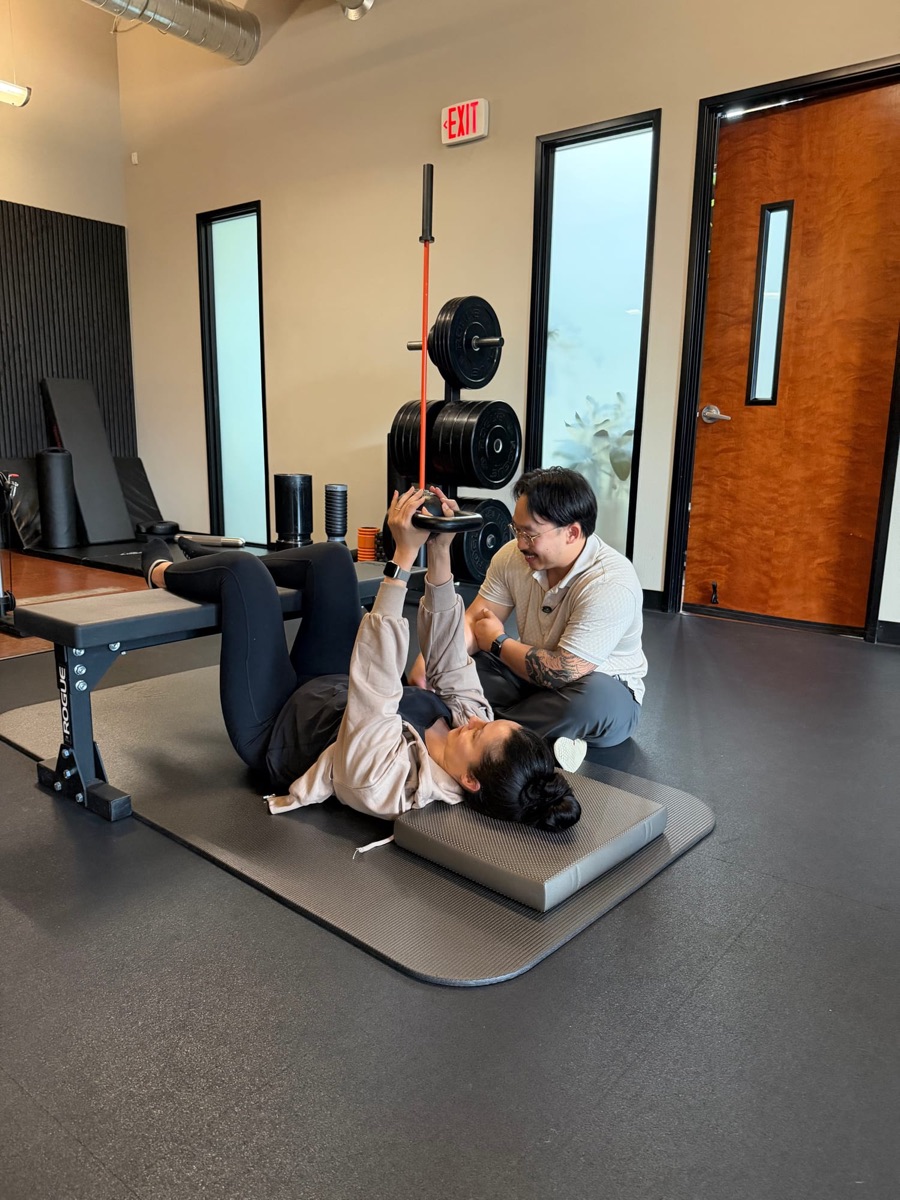
How we treat prenatal & postpartum
Rebuild the deep system, in a sequence that respects what the body has been through.
- 1Movement retrainingParticularly around breath mechanics and the deep bracing system that pregnancy disrupts.
- 2Pregnancy-safe and postpartum-appropriate adjustingGentle techniques that work with what the body is doing, not against it.
- 3Manual therapyFor the tissues that have been holding the compensation, especially around the pelvis, hips, and low back.
- 4Targeted strengtheningRebuilding the deep system in a sequence that respects what the body has been through.
- 5Coordinated careWe work with midwives, OBs, pelvic floor PTs, lactation consultants, and others when the patient needs more than chiropractic and movement work.
Prenatal
Pregnancy reshapes how the body braces, breathes, and hinges. Weight distribution shifts forward; the abdominal wall stretches; the diaphragm has less room to descend; the pelvic floor takes on new load. The hormone relaxin loosens pelvic ligaments to prepare for birth, and the surrounding muscles tighten to compensate.
When the trunk’s bracing system — the diaphragm, deep abdominals, and pelvic floor working together — stays coordinated through these changes, most pregnancies stay comfortable. When it doesn’t, the spine takes the load and the back, hips, and pelvis pay for it.
We use prenatal-specific adjusting techniques, manual therapy, and movement work focused on breathing, bracing, and hip hinging through every trimester.
Postpartum
Postpartum recovery often happens with no professional support beyond the six-week clearance visit. By that point the abdominal wall, pelvic floor, and bracing system have been remodeled by pregnancy and birth — and the new mother is being asked to lift, carry, feed, and rock a baby with a system that hasn’t been retrained.
We work with patients in the first months after birth, and patients whose youngest is in college. Both arrive with recoverable patterns. The difference is how long the body has been compensating around them.
Why it’s not too late
Pregnancy and birth are remodeling events. The patterns they leave behind are recoverable at any point — but they don’t rebuild on their own.
We see plenty of patients whose youngest child is in their teens or twenties, finally working on the back that’s hurt since the first pregnancy. The work is the same. The body remembers how to coordinate, and given the right inputs, it does.

Ask the doctor
Why does postpartum recovery matter, and when should it start?
Postpartum recovery is the most important part of the journey — and it starts before birth, built on your own foundation. Dr. Whitney on why proper postpartum guidance prevents years of avoidable pain.
Read Dr. Whitney's answer →Zach helped me stitch my body back together after I had given up hope on my lower abdomen following two C-sections.
What the research says
We show our evidence.
No study tests our approach as a whole. Here is what the better studies say about the pieces, including where the evidence is thin. Tap a card for the details and the source.
Exercise in pregnancy eases back and pelvic pain. Cochrane, 2015
A Cochrane review found low-quality evidence that exercise may ease low back pain and disability in pregnancy, and moderate-quality evidence that an 8- to 12-week exercise program reduces combined back and pelvic pain and related sick leave. Cochrane, 2015 ↗
Pelvic girdle pain: acupuncture and stabilising exercises. BMJ, 2005
In a Swedish trial of 386 pregnant women with pelvic girdle pain, adding either acupuncture or stabilising exercises to standard care reduced pain more than standard care alone one week after a six-week course; acupuncture gave more evening pain relief than the exercises. There was no placebo acupuncture group. BMJ, 2005 ↗
Pelvic floor training works best started early. Cochrane, 2020
A Cochrane review found that structured pelvic floor muscle training started early in pregnancy, in women who are not yet leaking, probably lowers the chance of urine leakage in late pregnancy and up to six months after birth. Whether it works as a treatment for leakage that is already present after birth is uncertain. Cochrane, 2020 ↗
Exercise in pregnancy eases pain severity. British Journal of Sports Medicine, 2019 · abstract
A 2019 review found that exercising during pregnancy lowered the severity of low back and pelvic pain during and after pregnancy, though it did not prevent it. British Journal of Sports Medicine, 2019 · abstract ↗
Other conditions
What else we work with.
- Low back painMost low back pain comes from overusing the spine and underusing the hips. We retrain the brace and the hinge so the load goes where it belongs.
- Headaches & migrainesThe pain shows up in your head, but the source is usually the neck, shoulders, and breath. We work upstream of the symptom.
- Shoulder painMost shoulders hurt because the shoulder blade isn't doing its job. The fix is teaching it to move again — not just adjusting the joint that's complaining.
- Knee painIn our experience, knee pain rarely starts in the knee. It usually starts at the hip or the ankle, and the knee — stuck in the middle — pays for it.
First visits are 2 hours, one-on-one with a doctor.
We'll evaluate how you move, talk through what we see, and tell you whether we can help — or refer you out if we can't.