Conditions · Concussion & whiplash · Portland & Vancouver
Recovery is active, not passive.
After a car accident or a hit to the head, you've probably been told some version of: "You're fine. Get some rest. It'll resolve on its own." Sometimes that's true. Often it isn't.
Two-hour first visit · one-on-one with the doctor every visit
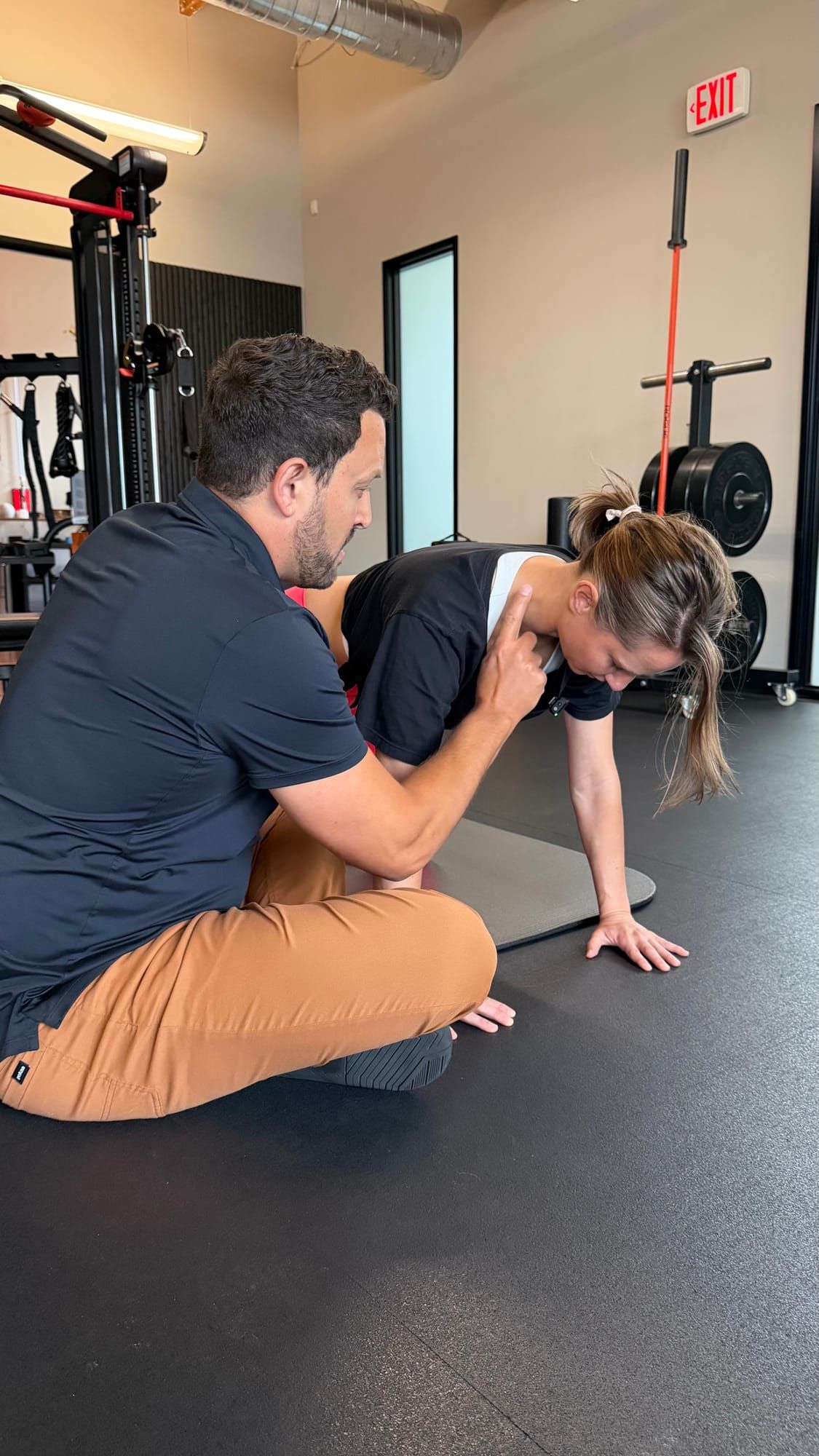
Sound familiar?
Symptoms we see after a concussion or whiplash
What we see
We treat them together because they recover together.
Concussions and whiplash often happen in the same incident — the same forces that whip the cervical spine also rotate the brain inside the skull.
A concussion is a functional brain injury from rapid head movement, even without direct impact. Whiplash is cervical-spine and surrounding-tissue stress from acceleration-deceleration forces.
Rest alone doesn't speed recovery: light activity started early does better than waiting it out.
How we evaluate · The Movement Paradigm
We watch how you breathe, brace and hinge.
Every first visit scores the same three patterns — patterns the injury often disrupts and that recovery depends on restoring.
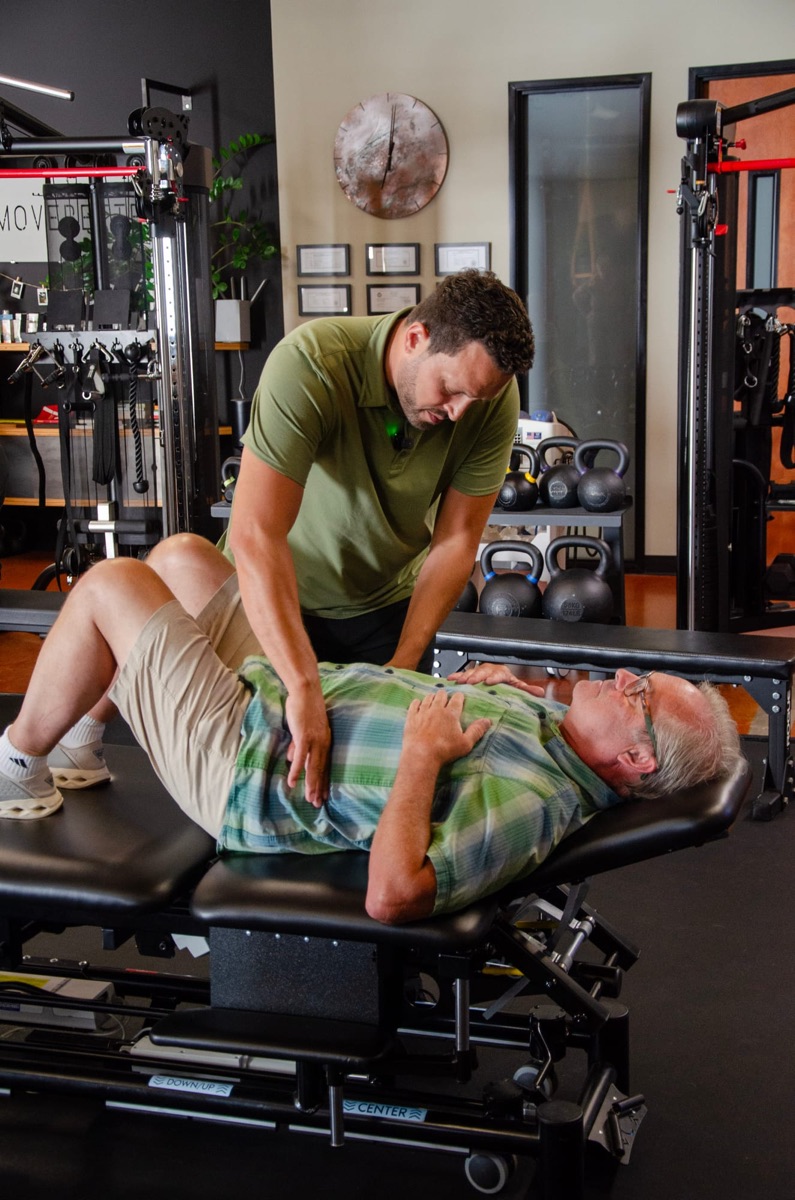
Breathe
A breath pattern that's been pulled high in the chest as a response to neck and shoulder guarding.
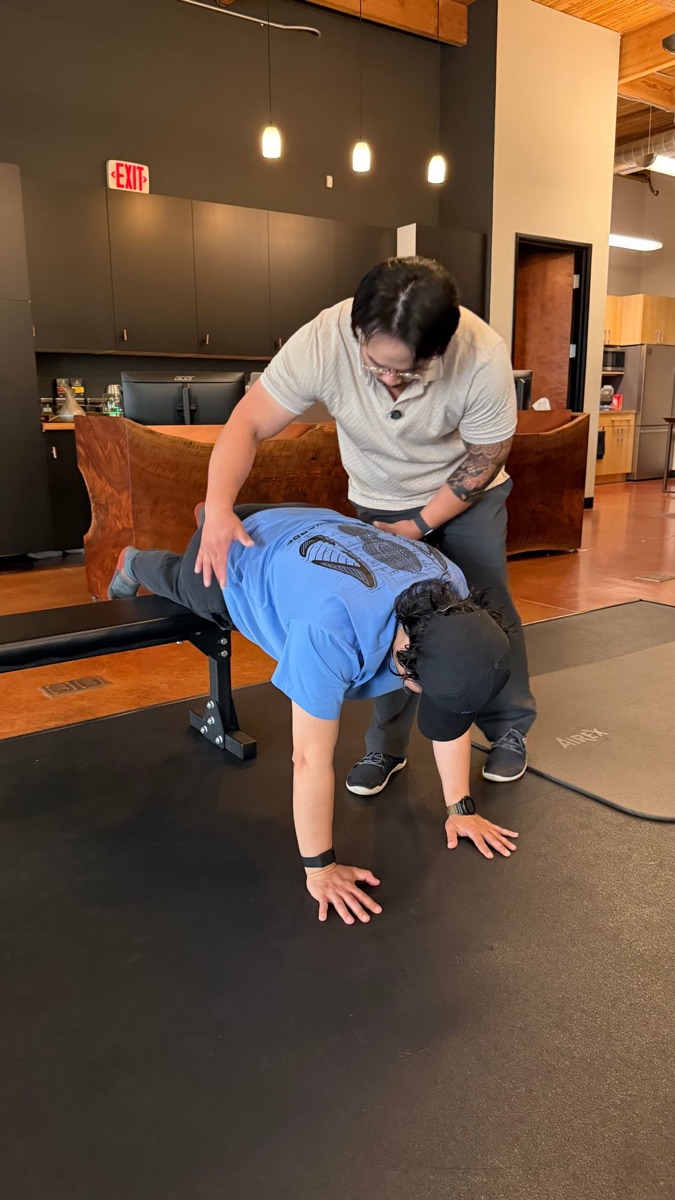
Brace
A brace pattern that stiffens the cervical spine to protect against the next hit, even when there isn't one coming.
Common after whiplash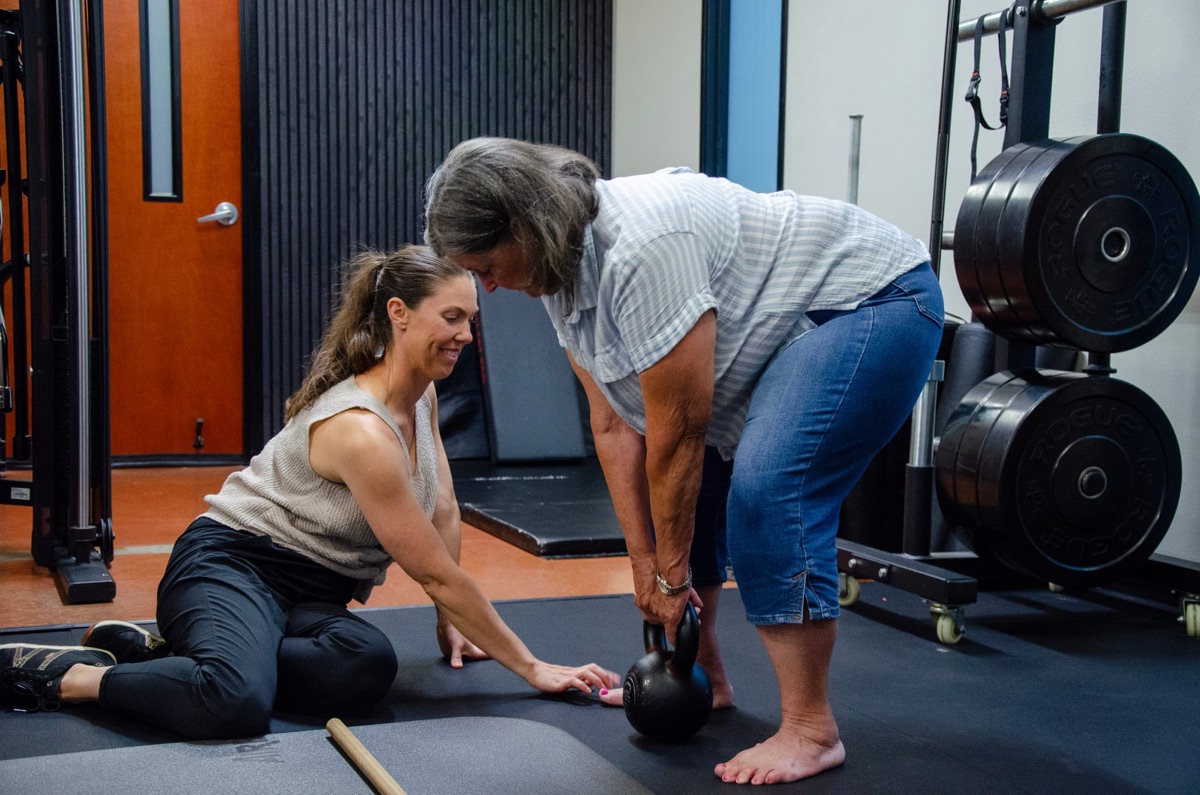
Hinge
Move from the hips. Take load off the knees, neck, and low back. The single most underused movement in chronic pain.
The evaluation also includes cervical-spine assessment, neurological and balance screening, and symptom correlation across systems.
What happens when you book
A clear path, from your first visit forward.
The first visit
Two full hours, one-on-one with the doctor. Movement screen, pattern scoring, and a plan built around what your body actually does - not what a template says it should.
Six-visit plan
Adjustments, soft-tissue work, and pattern retraining. Same doctor each time. Same room. Visible progress that you can feel between visits.
Re-exam & next steps
At visit six we re-score the patterns and decide together - maintain, taper, or refer out. If we're not the right fit, we'll point you to who is.
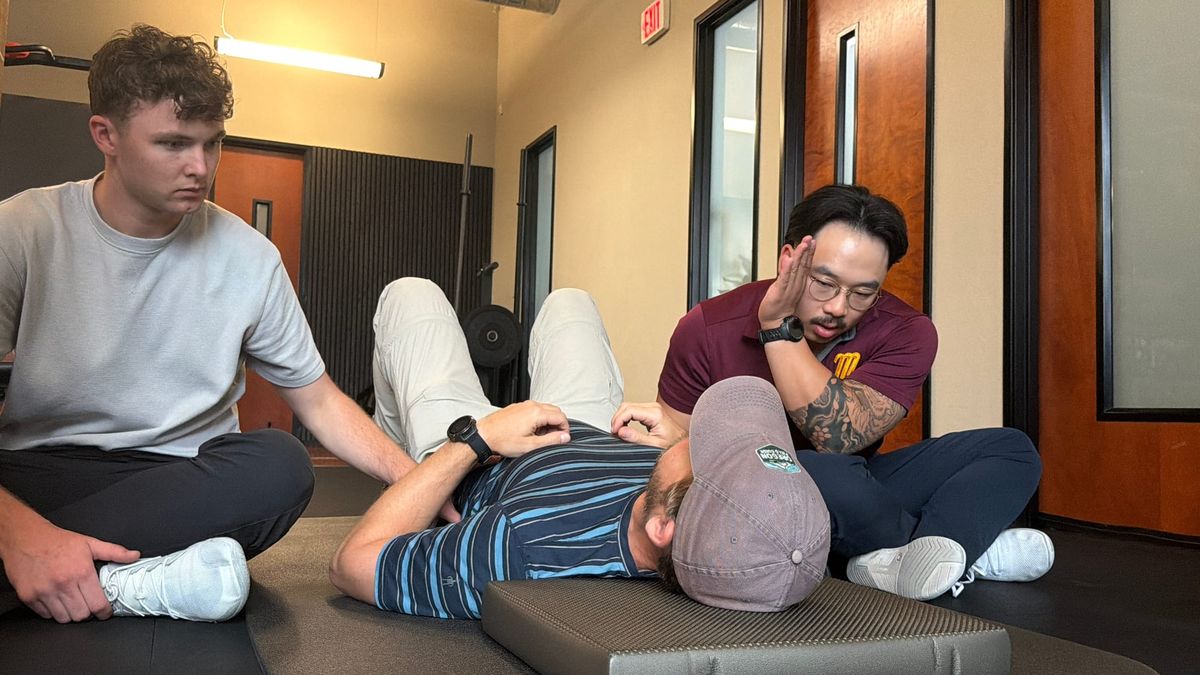
How we treat concussion & whiplash
Rebuild capacity in steps, with the right inputs at each one.
- 1Movement-based rehabilitationGraded movement that retrains the patterns the injury disrupted.
- 2Vestibular and visual rehabilitationFor the dizziness, balance, and visual symptoms common with concussion.
- 3Manual therapyFor the cervical spine and surrounding tissues that have been holding the post-injury pattern.
- 4Gradual return-to-activity planningRebuilding capacity in steps, with the right inputs at each one.
- 5Load management and educationKnowing what to push, what to back off from, and why.
- 6In-house massage therapy and acupunctureUseful adjuncts during recovery.
We coordinate with primary care, neurology, imaging centers, and other providers when the injury needs evaluation beyond what we offer.
A note on “low-impact” collisions
Low speed (5–10 mph) generates significant forces, especially to the head and neck. The dent on the bumper is a poor proxy for what happened to the person inside. We see plenty of legitimate whiplash and concussion from accidents that “didn’t look like much.”
Why early matters
The longer concussion and whiplash patterns go unaddressed, the more entrenched they become. The nervous system is plastic — but it’s plastic in both directions. If the body has been bracing the neck and breathing high in the chest for six months, those become the new normal, and the work to undo them is harder than the work to prevent them.
Getting evaluated in the first week is a sensible early step. Even if you’re not sure how bad the injury was, an evaluation tells you.
When to seek emergency care first
Some symptoms after a head injury or collision are emergencies and need to be evaluated at an emergency department before a movement clinic. Go to the ER (or call 911) if you experience any of these in the hours and days after an injury:
- Loss of consciousness
- Worsening headache that doesn’t respond to anything
- Repeated vomiting
- Seizures or convulsions
- Slurred speech, confusion, or unusual behavior
- One pupil larger than the other
- Numbness or weakness in arms or legs
- Inability to recognize people or places
Once you’ve been medically cleared, we’re a strong next step for the movement and recovery work.
I've experienced chronic pain for years and the treatment I have received has changed my quality of life.
What the research says
We show our evidence.
The strongest studies here are in young athletes with sport-related concussions, not car-crash injuries, and they tested exercise and timing of care, not hands-on treatment. Items marked "abstract" were read from the published summary only. Tap a card for the details and the source.
Light aerobic exercise beat stretching in teenage athletes. JAMA Pediatrics, 2019
In a trial that analysed 103 adolescents with a sport-related concussion, those prescribed gentle aerobic exercise, kept below the level that brought on symptoms, recovered in a median of 13 days, against 17 days with a stretching programme. Sports medicine physicians set the exercise level with a treadmill test, and the authors caution against applying the result to concussions from car crashes. JAMA Pediatrics, 2019 ↗
Being seen early was linked to shorter recoveries. JAMA Neurology, 2020
In one clinic's records of athletes aged 12 to 22, those first seen within a week of a sport-related concussion were less likely to take more than 30 days to recover than those first seen at 8 to 20 days. This is an association from a single observational study, not proof that the early visit caused the faster recovery. JAMA Neurology, 2020 ↗
Early activity helps; strict rest does not. British Journal of Sports Medicine, 2023 · abstract
A 2023 review found that early light activity and prescribed aerobic exercise sped recovery from sport-related concussion, and that strict rest until symptoms resolve is not effective. British Journal of Sports Medicine, 2023 · abstract ↗
Neck and balance rehab for lingering symptoms. British Journal of Sports Medicine, 2023 · abstract
A 2023 review recommends neck and balance (cervicovestibular) rehabilitation for adolescents and adults whose dizziness, neck pain or headaches last more than 10 days. British Journal of Sports Medicine, 2023 · abstract ↗
Whiplash: active care over standard care. Spine, 2003 · abstract · European Spine Journal, 2016 · abstract
In a trial of people with whiplash injuries, an active approach built on home exercise reduced pain and sick leave more than standard care. A traffic-injury guideline advises education, reassurance and staying active, and for recent neck pain, range-of-motion exercise or combined care that includes manipulation or mobilisation. Spine, 2003 · abstract ↗European Spine Journal, 2016 · abstract ↗
Other conditions
What else we work with.
- Low back painMost low back pain comes from overusing the spine and underusing the hips. We retrain the brace and the hinge so the load goes where it belongs.
- Headaches & migrainesThe pain shows up in your head, but the source is usually the neck, shoulders, and breath. We work upstream of the symptom.
- Shoulder painMost shoulders hurt because the shoulder blade isn't doing its job. The fix is teaching it to move again — not just adjusting the joint that's complaining.
- Knee painIn our experience, knee pain rarely starts in the knee. It usually starts at the hip or the ankle, and the knee — stuck in the middle — pays for it.
First visits are 2 hours, one-on-one with a doctor.
We'll evaluate how you move, talk through what we see, and tell you whether we can help — or refer you out if we can't.