When someone comes in with pain that flares during their sport, or a nagging stability issue that won’t quit, one of the first things we look at isn’t the joint they’re worried about. It’s how they’re breathing.
Chest Breath vs. Belly Breath: Two Different Nervous Systems
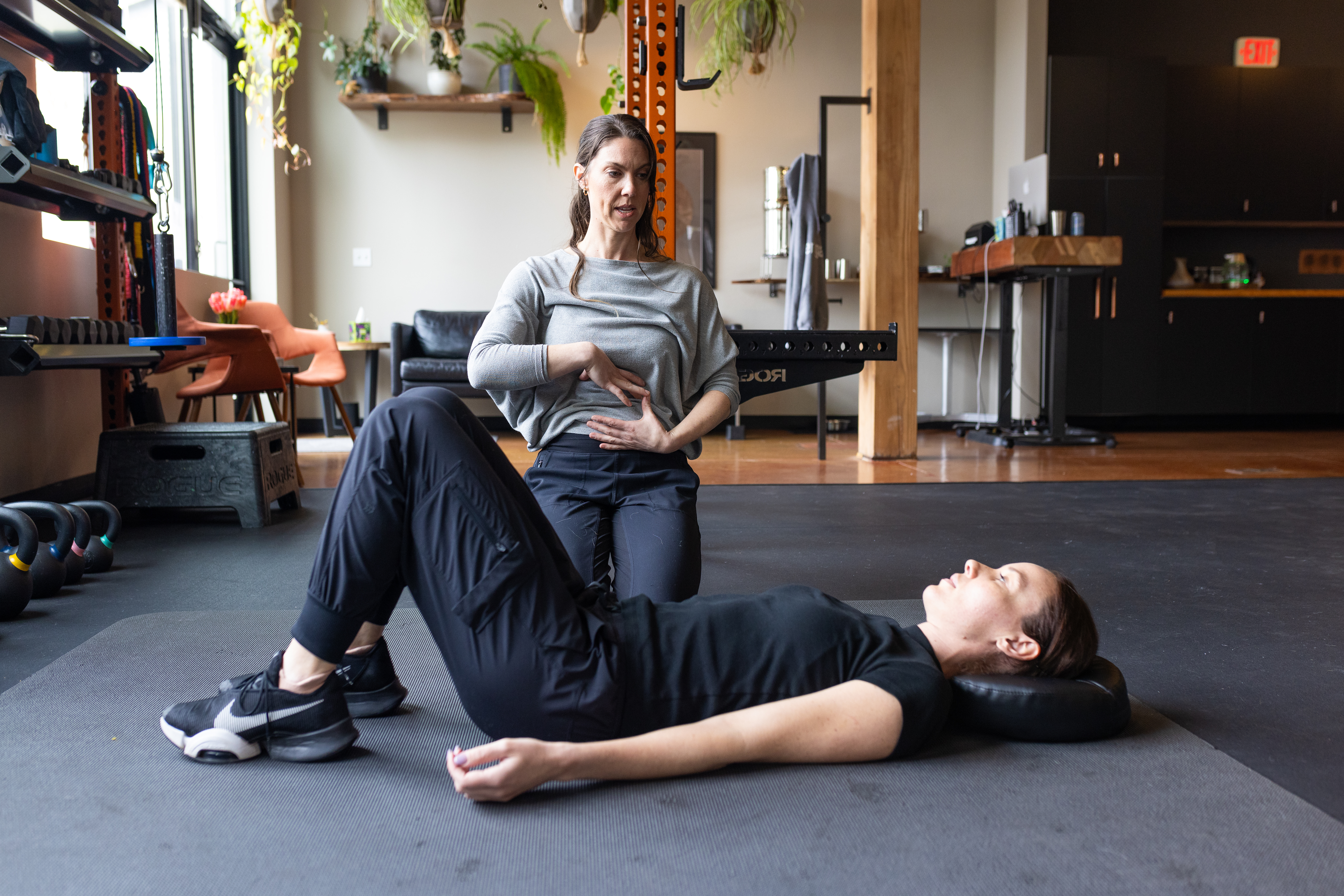
Here’s where we start: are they breathing more shallow into their chest, which stimulates the sympathetic nervous system, or are they getting a deeper abdominal breath pattern where the diaphragm is engaged, which stimulates the parasympathetic nervous system and allows for better stability by activating the abdominal muscles and intra-abdominal pressure?
Those are two completely different states. One is a body braced for threat. The other is a body organized to move well. Most people have no idea which one they’re defaulting to, especially under load.
What We’re Actually Looking For: 360-Degree Expansion
A “deep breath” isn’t the same thing as a diaphragmatic breath. We want to see expansion of the midsection of the abdomen, not just forward or up and down, but laterally and out towards the back. A 360-degree expansion around the midsection.
That’s the tell. If the breath is only lifting the chest or pushing the belly straight out, the diaphragm isn’t doing its real job, and neither is the rest of the system that’s supposed to work with it.
Why That Matters for Stability and Power
When the 360-degree breathing and expansion is happening, it’s allowing activation of the abdominal muscles, the pelvic floor, and the diaphragm to work together to create rigidity of the spine, the trunk, especially lumbar spine and pelvis, which tend to move too much when there’s a lack of engagement of that system.
That excess motion is where back issues often start. But the story doesn’t stop at the low back. The trunk is really the connector of the upper and lower body, and how we generate and transfer power between them. So if there’s a break in that system, you get two problems at once:
- Stress lands in areas that aren’t meant to take it, which shows up as pain.
- You lose power, balance, stability, and the full-body coordination that lets the upper and lower body work as one unit.
This tracks with what the research on diaphragmatic breathing and core stability has shown for years: the diaphragm isn’t just a breathing muscle, it’s a postural and stabilizing muscle. When it stops playing that role, something else has to compensate, and compensation is expensive.
The Breath-Holding Trap
Here’s something we see constantly: people hold their breath during performance movements and don’t even know it. Lifting weights, jumping, landing, hitting a tricky moment in a skill — the breath just stops.
A recent example. Someone came in this week who’s a skateboarder, does a lot of tricks and jumps and landings. He originally came in for ankle stability. But just working on his breath pattern over the past week from his first visit, he was realizing he was holding his breath during his tricks. When he would breathe, he would land way better. It felt better in his body, and his performance was significantly better.
That wasn’t what he came in for. He came in for decreased ankle pain and improved ankle stability.
And then, because he’s also a singer, he noticed he could use that same breath work to hold notes a lot longer and keep his diaphragm more engaged.
That’s what we love to see. One skill, learned once, showing up in multiple parts of someone’s life almost immediately.
Why We Start Here
The reason we assess breathing early isn’t because it’s trendy. It’s because it sits underneath everything else we’re going to ask the body to do. If the diaphragm and the deep stability system aren’t online, we can mobilize joints and strengthen muscles all day and the underlying pattern will keep pulling things back out of position.
Getting the breath working how it’s meant to work is one of the fastest ways to unlock stability, reduce pain that’s been driven by compensation, and get real performance gains, sometimes in a single week.
If you’ve been chasing a pain or a performance ceiling that won’t budge, and no one has ever actually looked at how you breathe under load, that’s a gap worth closing. You can book a first visit here and we’ll start there.