Disc Herniation in Portland: Why Surgery Isn’t Your Only Option
You’ve been told the disc is just wearing out. That aging is the cause. That surgery is probably your only real fix. If you’re sitting with that diagnosis and a growing list of things you can’t do anymore, we want you to hear something different — because the story you’ve been given is missing some important pieces.
What’s Really Going On With Disc Herniation
Here’s the logic gap most patients are never walked through: if aging tissue were the cause of disc herniations, every older adult would have one. That’s just not what the data shows. Plenty of people age without herniating a disc, and plenty of people do the same daily activities you do without ending up in pain. So the real question isn’t “did your tissue break down?” — it’s why did your disc, specifically, herniate where it did?
At Move Better, we don’t accept “your tissue just gave out” as a satisfying answer. There’s almost always a mechanical reason — a movement pattern repeated thousands of times that loaded one specific area beyond what it was designed to handle. That’s a story about how you move, not how old you are. And it’s one that responds beautifully to a function-first approach.
The Move Better Approach to Disc Herniation
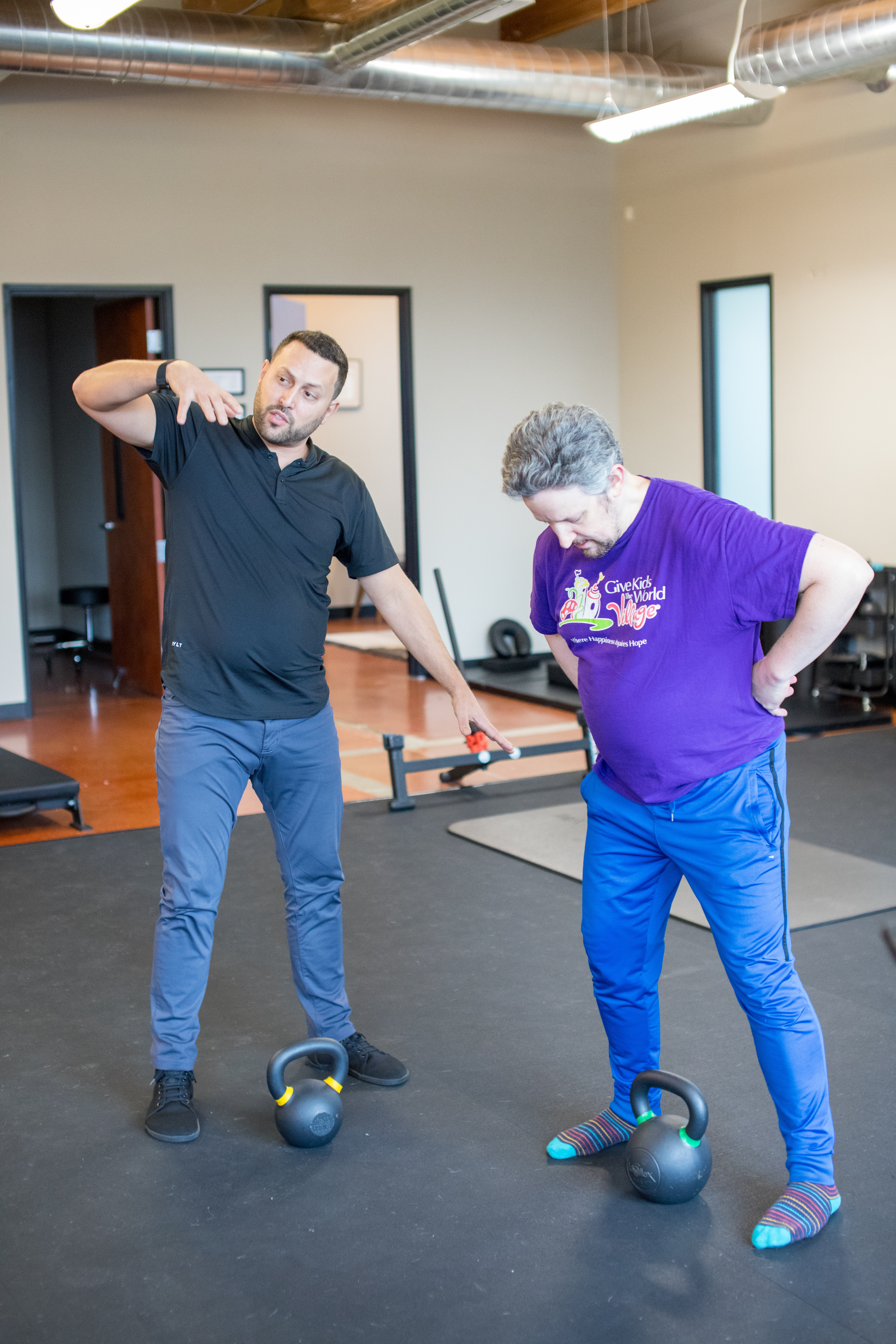
When someone walks into our clinic with a disc herniation, the first thing our team does is run them through our Movement Paradigm Scoring system. One of the most revealing tests is something deceptively simple: we watch you sit down in a chair. That single movement tells us two things almost immediately. First, how you stabilize your midline — whether your low back flexes or extends the moment you start moving (a sign you’re loading passive tissue instead of using muscle). Second, where the motion initiates — and in patients with disc herniations, it almost always starts at the knees instead of the hips. That second pattern is the quiet culprit. When you initiate from the knees, you completely unload the powerful muscles around the pelvis — your glutes, hamstrings, quads, adductors. The lumbar spine ends up doing the work those big muscles should be doing. Repeat that thousands of times over years, and you have your why to the disc herniation.
What Our Patients Experience
The good news is this any pattern is teachable. We start with two simple focuses: bracing your midline (we often begin lying on your back, learning what abdominal pressure actually feels like), then transferring that to standing. From there, we re-pattern how you load — initiate from the hips, push the ground away with your feet, let the big muscles do their job. That small cue, push your feet into the floor, has incredible power. Every can intuit and feel that the back does not push your feet down. It certainly can bring your spine away from the ground, but not push feet away. So when we shift your focus to foot pressure, the back naturally exits the equation.
Most of our patients see significant changes in pain and function within about six weeks. That’s phase one. Phase two is where we slowly add load to create real structural change in the tissue. Phase three is where we push capacity — strength training that cements the new pattern so deeply your body defaults to it under stress. Disc tissue heals more slowly than muscle, so we respect that timeline. But “slower than muscle” is very different from “needs surgery.” Most of the patients we see avoid the operating room entirely.
The Insight Most People With Disc Herniation Are Missing
Here’s what gets lost in the standard conversation, as our clinician Dr. Q often points out: the disc isn’t failing because it’s old. It’s failing because it’s being asked to move in ways it wasn’t designed to handle. Every time you sit, stand, or pick something up by flexing and extending through your lumbar spine with compressive forces to the disc instead of sending most of that work by hinging at your hips, the disc and the ligaments behind it stretch and compress. Over and over and over. That’s not aging. That’s a repetitive loading problem — and repetitive loading problems are exactly the kind of thing movement-based care can fix. You don’t need to accept that your spine is just falling apart. You need someone to actually look at how you’re moving and help you change it.
Ready to Move Better?
If you’re in Portland with a disc herniation and you’ve been told surgery is your only path, we’d love to offer you a second perspective. We also want you to know that you will feel real change and real relief in one visit. Movement is medicine here, and we’ve helped a lot of people get back to lifting their kids, hiking Forest Park, and sleeping through the night without resorting to the operating room. Come see us, run through our assessment, and let’s build you a real plan with a real endpoint. Book a visit with our team — we’d be glad to help you find your way back.
Move Better · Portland, OR